Woodmoor's Bear Season Just Got Two Sets of Rules, Not One
September 24, 2026
September 24, 2026
The Woodmoor Improvement Association board meets on the fourth Wednesday of every month in the Barn at 1691 Woodmoor Drive, and most months the agenda reads like any small association's business: covenant checks, forestry updates, a budget line or two. On August 26, 2026, with board president Brian Bush absent, the conversation turned to bears. Public Safety Director Brad Gleason told the board that sightings were up and that residents kept leaving trash cans out overnight. Covenant Director Jennifer Davis followed with something newer: a state law that had taken effect two weeks earlier, one that changes what happens to a homeowner whose bin gets knocked over one time too many.
Here's what nobody at that meeting said out loud, but what the timeline makes clear if you line it up: Woodmoor residents now have two separate systems watching the same trash can. One is new. One has been sitting in the association's covenant rules the whole time, just waiting for a summer like this one to matter.
House Bill 26-1342, known as the Negligently Luring Bears law, was signed by Governor Polis on May 27, 2026, and became effective statewide on August 12. Before that date, Colorado law required intent. A person had to be shown to have deliberately put food out to attract a bear, and a first offense came with a mandatory warning before any citation could follow. The new law drops the standard from intentional to knowing, which means an officer no longer has to prove you meant to feed a bear, only that you knowingly left food or edible waste somewhere a bear could reasonably find it. The mandatory warning is gone too. Fines for a third or subsequent offense jump from $2,000 to $5,000.
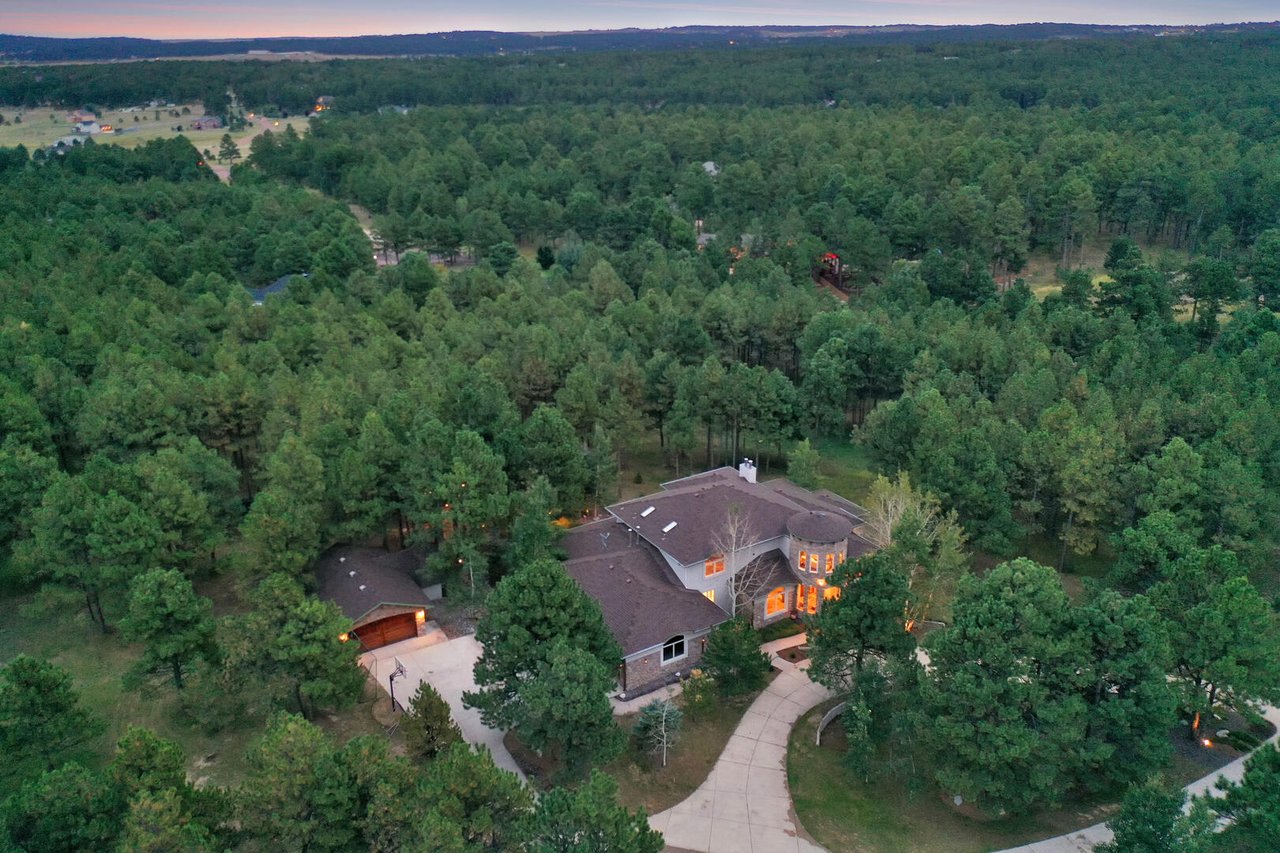
Read the bill text at the Colorado General Assembly's site and the target audience becomes obvious. This isn't a law aimed at campers leaving coolers open in the backcountry. It's aimed at exactly the kind of place Woodmoor is: roughly 2,000 acres of ponderosa pine and open meadow, close to 9,000 residents spread across nearly all of the neighborhood's 2,972 lots, with trash pickup on a schedule and bears that have learned the schedule too. Representative Katie Stewart, one of the bill's sponsors, put the logic plainly when she said the financial penalty "brings out awareness" in a way warnings hadn't. The governor's signing statement makes the same point about food storage, not wilderness behavior.
Here's where it gets interesting, and where a generic bear-safety post would stop short. Back in April 2026, while the bill was still moving through committee, Colorado Parks and Wildlife had logged 98 bear activity reports across 22 counties for the year to that point, according to reporting in the Colorado Springs Gazette. That's fewer than the 127 reports logged in the same window the year before. Statewide, on paper, bear conflicts looked like they were trending down, not up, as the law was being debated.
That statewide dip is exactly why the Woodmoor conversation four months later stands out. If the state trend had held locally, August wouldn't have been the month WIA's public safety director stood up and said sightings were increasing enough to make trash cans a standing agenda item. Something local pulled against the statewide number. Maybe it's the ponderosa pine cover that runs through half the neighborhood's common areas, maybe it's a summer with a thinner natural food supply higher in the foothills pushing bears down toward subdivisions, but the point for a Woodmoor resident isn't the state's spreadsheet. It's that whatever the statewide count says, your own board is telling you the activity here is real enough to spend a meeting on.
This is the part that actually changes how a Woodmoor homeowner should think about trash night, and it has nothing to do with the new state law directly. WIA's own covenant enforcement already treats loose items outside as a violation category, separate from anything CPW or a sheriff's deputy does. In the same August meeting where the bear law came up, Covenant Director Davis reported that July alone produced eight covenant violations for a barking dog, unstowed firewood, and unstowed items. That's the same association process that's been running for years, tracked house by house, and it already produces real hearings. The same meeting noted two covenant hearings already scheduled for September, arising from exactly this kind of repeat violation.
So a trash can left out overnight in Woodmoor was already something the association could flag before HB26-1342 ever passed. What changed on August 12 is that the exact same can, if it draws a bear, can now also put its owner in front of a state citation with real money attached, no warning required on the first offense. One system runs through the WIA office and a covenant hearing. The other runs through law enforcement and Colorado Revised Statutes. They don't talk to each other, and they don't need to, because they're both reacting to the same bin sitting at the curb a little too long.
| WIA Covenant Process | State Law (HB26-1342) | |
|---|---|---|
| Who enforces it | WIA Covenant Control, reported via Woodmoor Public Safety | Local law enforcement or CPW officers |
| Standard | Complaint-driven, verified on-site | Knowingly leaving food/waste where a bear could reasonably find it |
| First offense | Violation notice issued on-site if verified | No mandatory warning required as of August 12, 2026 |
| Repeat penalty | Covenant hearing for repeat violations | Fine up to $5,000 for a third or subsequent offense |
Neither track is punitive by design. Both exist because a can left out one Tuesday becomes a habit a bear remembers, and once a bear learns a street has easy meals, it keeps coming back regardless of which authority eventually gets involved.
The timing matters for another reason that has nothing to do with trash directly. This spring, WIA volunteers reported that the pedestrian bridge intended to carry the Safe Routes to School trail over the Woodmoor Lake spillway had been delivered and staged just north of Lake Woodmoor Drive. The project, funded through a federal Safe Routes to School grant and built through an agreement between Lewis-Palmer School District, WIA, and Woodmoor Water and Sanitation District, will give students a walking route between Lewis-Palmer Elementary, Lewis-Palmer Middle School, and Palmer Ridge High School that doesn't require a car. Once it's open, it puts more feet, more backpacks, and more forgotten granola bars on a stretch of trail that runs right along the lake.
That trail isn't isolated from the rest of the neighborhood's common areas either. WIA maintains a network that most residents already use without thinking of it as one system: Wild Duck Pond off Winding Meadows Way and the Twin Ponds near Hidden Springs Glen, both stocked each season with trout, carp, and minnows for residents to fish without a state license since the ponds sit on private association land. The Marsh, fourteen acres at Top O' the Moor Drive West, where dogs run off leash. North Park's twelve acres of ponderosa pine off Furrow Road. The South Woodmoor Preserve, sixty-five acres the association acquired through a donation agreement in June 2022, with a two-mile trail winding through it. None of these places are new bear risks. They're just the places where more people are about to be walking, right as the association is asking everyone to think harder about what's sitting in their driveway.
None of this requires a different lifestyle. It requires the same short list of habits CPW has been recommending as bears prepare to den for winter, paired with what Gleason specifically asked Woodmoor residents to do in August:
The council-level detail worth remembering is that these habits now do double duty. They keep a household off WIA's covenant log for unstowed items, and they keep a household clear of a state citation that no longer comes with a free pass on the first offense. Woodmoor's board didn't create the new law, but the timing means the neighborhood is dealing with both systems at once for the first time this fall, and the ponderosa pine cover that makes this such a good place to walk a dog is the same cover that makes a bear feel at home here too.
If you want the kind of updates that come out of rooms like the Woodmoor Improvement Association's meetings, rather than a generic seasonal reminder, that's the kind of ground-level detail we track for clients and neighbors alike. The Fletcher Team & Associates works Monument and the northern Colorado Springs suburbs because we live here too, and if you'd like a look at how these details connect to your own street, reach out any time. Receive Exclusive Listings & Free Home Valuation whenever you're ready.

Brighten Every Room in Your Monument Home Year-Round.
Elevation-Smart Yard Design for Monument, Colorado, Homes.

Your Guide to Mortgage Pre-Approval Before You Start the Home Search in Monument.

Design Details and Small Luxuries That Elevate Your Morning Routine in Monument.

Practical, Green Upgrades for Eco-Friendly Homes in Monument.
Having the right real estate team means having a team who are committed to helping you buy or sell your home with the highest level of expertise in your local market. This means also to help you in understanding each step of the buying or selling process.
Get In Touch With Our Team
155 2nd Street Monument, CO 80132